It sounds backwards, but the hottest weeks of an Albuquerque summer are exactly when air conditioners are most likely to freeze solid. If you’ve spotted ice on the copper lines outside or your vents are barely whispering while the thermostat climbs, you’re not imagining things. The team at B. Carlson Heating, Air Conditioning & Plumbing sees frozen refrigerated-air systems every August across Albuquerque, Rio Rancho, and Corrales, and the fix is usually simpler than homeowners fear. Here’s why it happens and what to do before the problem gets expensive.
How Can an AC Freeze When It’s 98 Degrees Outside?
Your air conditioner doesn’t create cold air. It moves heat from inside your home to the outdoors by passing warm indoor air over a very cold evaporator coil filled with refrigerant.
That coil depends on a steady stream of warm air flowing across it. When airflow drops or refrigerant pressure falls, the coil’s temperature dips below freezing. Even our dry high-desert air carries some humidity, which condenses on the coil and freezes instead of dripping away. Ice builds on ice until airflow chokes off entirely.
The outdoor heat actually makes it worse. Your system runs longer cycles during a stretch of triple-digit afternoons, which gives a struggling coil more time to ice over and less time to thaw between cycles.
Why Is My AC Freezing Up? The Usual Suspects
Almost every frozen AC traces back to one of two root problems: not enough warm air moving across the coil, or not enough refrigerant inside it. Here are the specific causes we find most often on Albuquerque service calls.
- A clogged air filter — This is the number-one cause. A filter loaded with summer dust, pet hair, and cottonwood fluff strangles airflow, and the coil gets too cold. Swapping in clean air filters on schedule is the cheapest freeze prevention there is.
- Low refrigerant from a leak — Refrigerant doesn’t get “used up.” If it’s low, it leaked out somewhere. Low pressure makes the coil run colder than designed, and ice follows. This one always needs a professional, because the leak has to be found and repaired, not just topped off.
- Blocked or closed vents and returns — Furniture pushed against a return grille, closed bedroom registers, or a blocked hallway return starves the system of the airflow it was engineered for.
- A weak or failing blower motor — If the blower can’t move enough air, the coil freezes even with a brand-new filter. Squealing, humming, or weak airflow at every vent are the tells.
- A dirty evaporator coil — Years of fine desert dust form an insulating blanket on the coil itself, so it can’t absorb heat properly. This buildup is one of the things a regular AC maintenance visit is designed to catch.
What Should You Do the Moment You Find Ice?
The right first moves cost nothing and can save your compressor.
Step 1: Turn off cooling, but leave the fan on
Switch your thermostat from Cool to Off, then set the fan to On. Running cooling with a frozen coil strains the compressor and can let liquid refrigerant slug back and damage it. The fan alone pushes room-temperature air across the coil, which melts the ice from the inside out, usually within a few hours.
Step 2: Check the filter and the vents
While the ice melts, pull the filter. If you can’t see light through it, replace it. Walk the house and open every supply register, and make sure nothing is parked in front of your return grilles.
Step 3: Don’t chip, pry, or scrape the ice
The evaporator coil is made of thin aluminum fins and soft copper tubing. A screwdriver or ice pick can puncture it in a heartbeat, adding a refrigerant leak to your original problem. Let the fan do the work, and set a towel or shallow pan under the indoor unit, because that ice becomes water.
When Is a Frozen AC a Repair Call?
If the system froze once, you replaced a filthy filter, and it has run normally since, you probably found your answer. But some situations point to a problem that will keep coming back.
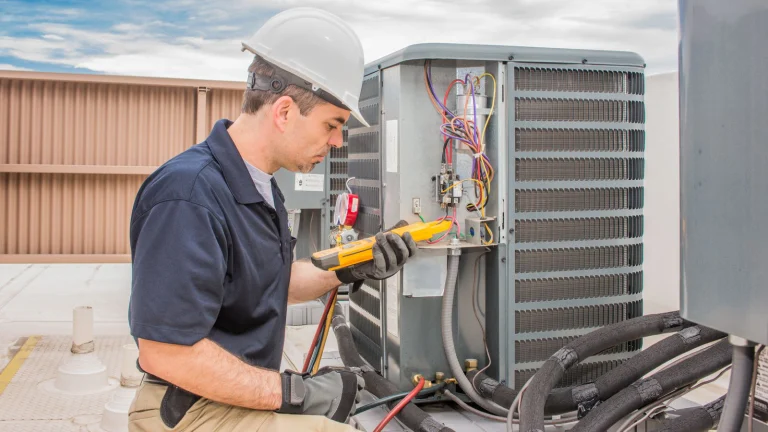
Call a professional if the system refreezes after a filter change, if you hear hissing or bubbling near the refrigerant lines, if the airflow stays weak even with a clean filter, or if the ice returns within a day or two. Those symptoms point to a refrigerant leak, a blower problem, or a coil issue, and each gets more expensive the longer the system runs. Our AC repair team diagnoses the root cause rather than just thawing the symptom.
And if your home is climbing past 85 degrees on an August afternoon with no working cooling, that’s not a wait-until-Monday situation, especially for older family members, babies, or pets. B. Carlson offers emergency AC repair around the clock for exactly these moments.
Can You Keep It From Freezing Again?
Mostly, yes. Freeze-ups are one of the most preventable AC failures we see. Change your filter every one to three months during cooling season, and more often during our windy, dusty spring. Keep supply registers open even in rooms you rarely use, since closing them raises pressure and cuts total airflow. Rinse leaves and debris away from the outdoor unit so the whole system breathes easily.
Most of all, have the system professionally tuned up each spring. A technician measures refrigerant pressure, cleans the coils, checks the blower, and catches the slow leaks and worn parts that turn into mid-July ice blocks.
Frequently Asked Questions
How long does it take a frozen AC to thaw?
With the system off and the fan running, most residential coils thaw in one to three hours. A heavily iced system can take up to 24 hours. Resist the urge to restart cooling early; wait until airflow from the vents feels strong and steady again.
Will a frozen AC fix itself?
The ice will melt once the system stops cooling, but whatever caused it doesn’t go away on its own. If the cause was a dirty filter, a fresh one may genuinely solve it. If the cause is low refrigerant or a failing blower, the system will freeze again, and every repeat freeze puts more strain on the compressor, the most expensive part in the system.
Does low refrigerant mean I need a whole new AC?
Not necessarily. A technician can often locate and repair the leak, then recharge the system to specification. If an older unit uses a phased-out refrigerant and has a major coil leak, repair may cost more than it’s worth, and your technician should walk you through both numbers before you decide.
Iced Over in the August Heat? We’ll Get You Cooling Again
A frozen AC in the hottest stretch of the summer is fixable, and it’s far cheaper to fix early than after the compressor pays the price. If your system keeps icing up, schedule a visit with our AC repair pros or contact B. Carlson today. We provide fast, honest air conditioning repair in Albuquerque and throughout Rio Rancho, and we’ll have your home comfortable again before the afternoon sun hits its peak.