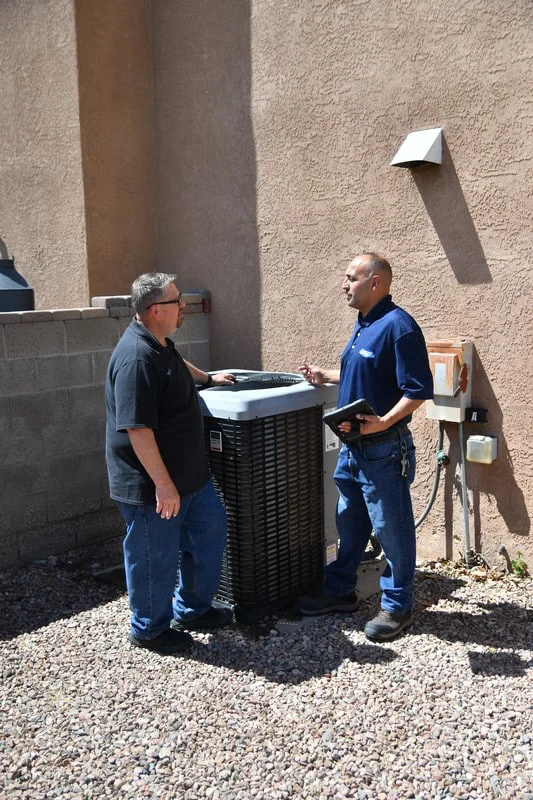
Yes, in most of the Albuquerque metro. Mini-splits handle our summer heat easily, and they heat efficiently through the long, mild shoulder seasons where they spend most of their operating hours. In genuinely cold microclimates — Santa Fe, Cedar Crest, the East Mountains — a cold-climate model or a backup heat source is the right call.
Summer Performance
Cooling is where mini-splits are unambiguously strong here. Inverter compressors modulate rather than cycling, so they hold a steady temperature through a 100-degree afternoon instead of overshooting and coasting. With no ducts running through a 130-degree attic, none of the cooling you paid for is lost on the way to the room.
Winter Performance
Mini-splits are heat pumps, and heat pump efficiency declines as outdoor temperature drops. In Albuquerque proper — where winter lows are cold but not severe, and where a large share of heating hours fall in the 30s and 40s — that decline is manageable, and the systems perform well. Modern cold-climate models extend usable capacity considerably further down than older equipment did.
Where You Need a Plan B
At higher elevations and in the East Mountains, sustained deep cold pushes a straight mini-split onto electric auxiliary heat, which is expensive to run. Options there:
- Specify a cold-climate rated model with better low-temperature output
- Keep an existing gas furnace or boiler as backup for the coldest stretches
- Use a hybrid fuel system that hands off to gas automatically below a set outdoor temperature
Sizing Matters More in Extremes
A system sized only for the average day will disappoint on the extreme ones. We run a room-by-room load calculation that accounts for your specific microclimate, insulation levels, and window exposure — Albuquerque and the East Mountains are genuinely different design problems.
Where They Shine Regardless
Additions, casitas, converted garages, sunrooms, and adobe homes with no ductwork — and the one room central air never got right. Financing is available.