The signs are banging pipes when a faucet or appliance shuts off, forceful hard-to-control faucets, repeat leaks in different locations, a water heater relief valve that weeps, running toilets, and appliance supply hoses failing. A gauge on a hose bib confirms it in two minutes.
Measure It Rather Than Guessing
An inexpensive pressure gauge threads onto an outside hose bib. Read it with no water running. Check at night too — municipal pressure typically rises overnight when demand drops, so a house that reads acceptable in the evening can be well over the safe range at 3 a.m., stressing everything while you sleep.
The Symptoms
- Water hammer. Banging or knocking in the walls when a faucet closes or the washing machine or dishwasher shuts a valve.
- Faucets that spray forcefully and are hard to modulate.
- Repeat leaks in different places. This is the telling one — individual leaks look unrelated, but excess pressure is the common cause acting on every joint simultaneously.
- A water heater T&P valve that weeps, frequently blamed on the valve when system pressure is the real problem.
- Running toilets from fill valves that cannot seal against the pressure.
- Short-lived fixture cartridges and washers.
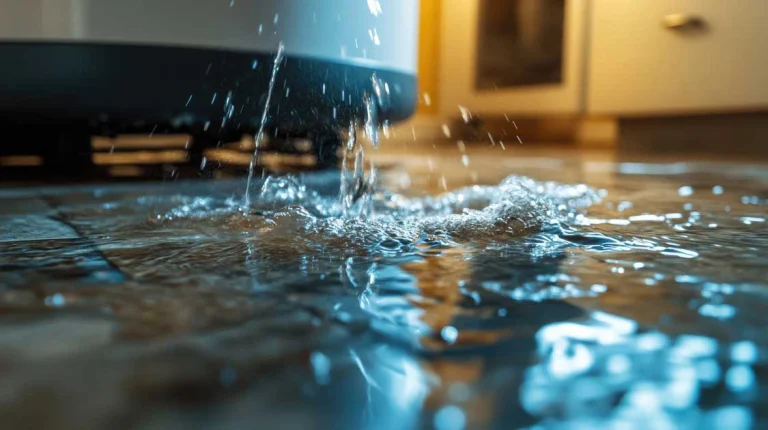
- Appliance supply hoses failing — how kitchens and laundry rooms flood.
Why It Matters More Than It Seems
Excess pressure is one of the most underdiagnosed causes of plumbing failure. It acts continuously on every joint, seal, and hose in the house — not occasionally. Homeowners fix each resulting leak individually while the actual cause keeps working, which is why the leaks keep coming.
The Fix
A pressure reducing valve at the point water enters the home. If you already have one and pressure reads high, it has likely failed — they wear out, and Albuquerque’s hard water scales the internal seat. Replacement is inexpensive relative to the damage excess pressure causes over years.