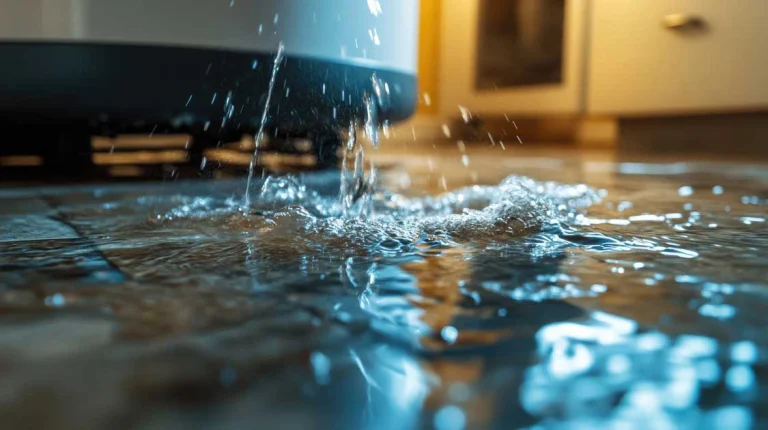
Yes. Even a small water heater leak is dangerous — water reaching electrical connections or gas controls creates shock and fire risk, and a slow leak soaking into walls, subfloor, or ceiling causes mold and structural damage long before anyone notices it. Shut off the water and the power, then call.
What to Do Right Now
- Shut off the cold water supply at the valve above the heater. If it will not close, use the main shutoff for the house.
- Cut the energy source. Gas: turn the gas control valve to OFF. Electric: switch off the breaker. Never leave an element energized in a draining tank.
- Stay clear of standing water near electrical connections or the burner compartment.
- Contain and remove the water to limit damage to flooring and drywall.
- Note where it is coming from — that determines whether this is a repair or a replacement.
- Call a licensed plumber.
The Three Real Hazards
Electrical and gas. Water reaching wiring, a gas control valve, or a burner assembly is a shock and fire risk, and a wet gas control can fail in ways that are not obvious.
Structural and mold. A slow leak wicks into subfloor, drywall, and framing. In an attic or upstairs closet installation it reaches the ceiling below. Mold remediation and structural repair routinely cost more than the water heater did.
Catastrophic failure. A tank that is weeping today can rupture tomorrow, dumping 40 to 50 gallons at once. That is the scenario that ruins finished space.
Where the Leak Is Tells You a Lot
Connections at the top, the drain valve, or the T&P valve are generally repairable. Water coming from the tank body itself is not — a corroded tank means replacement. If the T&P valve is discharging, that may be a failed valve or a genuinely over-pressurized system, which needs diagnosis.
If You Smell Gas
Leave the house first, without touching switches. Call the gas utility from outside, then call us.
Why Tanks Leak Early Here
Albuquerque’s hard water builds sediment that insulates the burner, so it runs hotter and stresses the tank lining. Annual flushing, anode rod replacement, and a water softener extend tank life significantly.