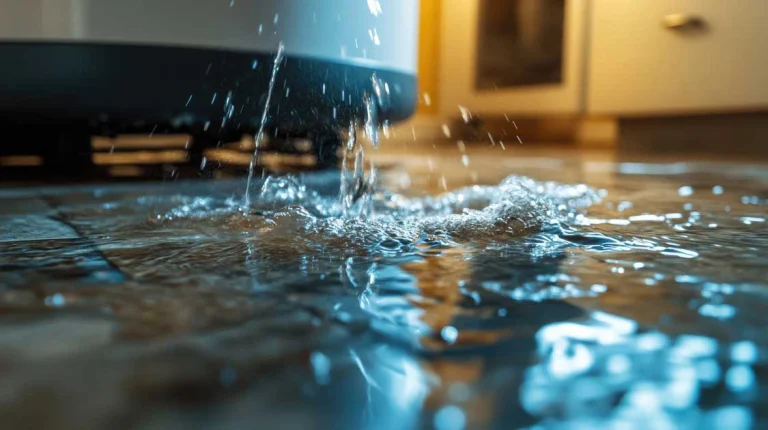
Worn washers, O-rings, and cartridges cause most faucet leaks, followed by damaged valve seats and — the Albuquerque-specific accelerant — mineral scale from hard water that chews up seals faster than they should wear.
The Usual Causes
- Worn washer or seal. In compression faucets, a rubber washer presses against the valve seat every time you shut the water off. It compresses and hardens with age, and the result is a drip from the spout.
- Failed O-rings. These seal the base of the spout and the stem. When they fail, water appears at the base of the faucet rather than the spout — a useful distinction, because it tells you which part failed.
- Worn cartridge. Most modern single-handle faucets use a cartridge instead of washers. When it wears, you get dripping, hard operation, or temperature that will not hold.
- Corroded valve seat. The surface the washer presses against pits from mineral deposits, so even a new washer will not seal.
- Loose or worn packing nut, which causes leaking around the handle.
- Cracked body or fitting, usually from freeze damage or overtightening.
Why Albuquerque Faucets Leak Sooner
Hard water. Dissolved calcium and magnesium deposit on valve seats, cartridges, and O-rings, creating an abrasive surface that grinds away seals faster than they would wear in soft water. That scale also pits the valve seat itself, which is why replacing the washer sometimes does not stop the drip.
A water softener extends the life of every faucet, valve, and fixture in the house, along with your water heater.
The Other Underlying Cause
High water pressure. Excess incoming pressure stresses seals continuously and shortens their life throughout the house. If several faucets are dripping, check pressure before replacing parts — a pressure reducing valve may be the actual fix.
Worth Fixing Promptly
A steady drip wastes a meaningful amount of water over a year, and in hard water it stains the fixture permanently.