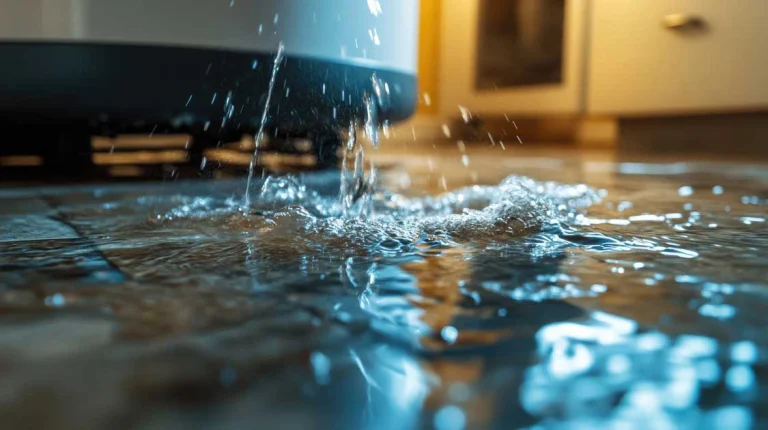
A plumbing emergency is any failure causing active damage, creating a health hazard, or leaving the home without usable water. Burst pipes, uncontrollable leaks, sewage backups, gas odors, and a failed water heater tank all qualify.
The Emergencies
- Burst or actively leaking pipe you cannot isolate with a shutoff valve
- Sewage backing up into a tub, shower, or floor drain — a biohazard requiring professional cleanup
- No water at any fixture, particularly during a freeze when frozen pipes are the likely cause
- Gas odor near any appliance or gas line — leave the building, call the gas utility from outside
- Water heater leaking from the tank itself, which will eventually release its full 40 to 50 gallons
- Water near electrical panels or outlets
- The only toilet in the home blocked and not clearing
- A main line blockage where every fixture backs up
What Is Urgent but Not an Emergency
A clogged drain with other fixtures working, a running toilet, a dripping faucet, or low pressure at one fixture. These deserve prompt attention at standard rates, not an after-hours call.
Why Speed Matters on the Real Ones
Water damage compounds fast. Within hours it soaks into subfloor, drywall, and framing; within a day or two mold begins. The remediation bill routinely exceeds the plumbing repair that would have prevented it — which is why an after-hours call is usually the cheaper choice, not the expensive one.
The First Thing to Do
Shut off the water. Fixture stops are under sinks and behind toilets; the main is usually where the supply enters the building or near the meter. Knowing where yours is before an emergency is the single most valuable thing you can do — and it is worth ten minutes on a Saturday to find it and confirm it turns.
What We Do
24/7 dispatch triaged by severity, trucks stocked with common parts, and a firm written price before work begins — at any hour. Care Club members get priority and member pricing.