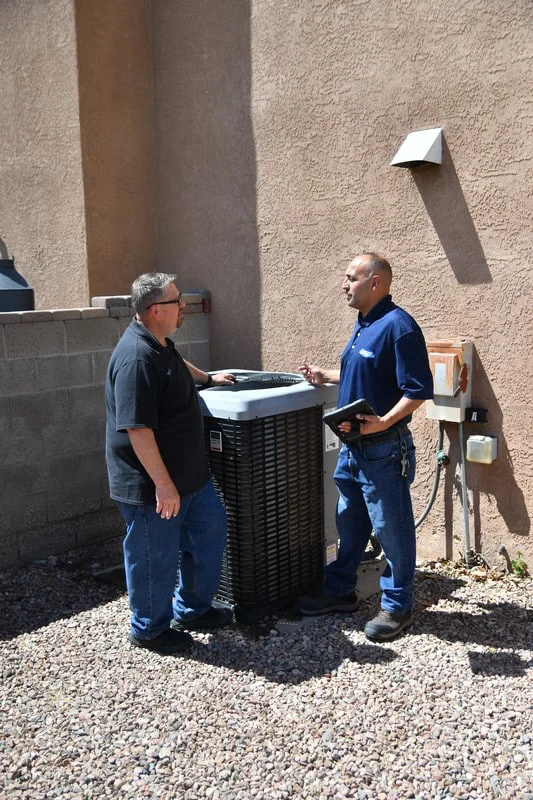
A whole-house filtration system cleans all the air circulating through your ductwork rather than one room at a time — reducing dust, pollen, and dander throughout the home while also protecting the HVAC equipment itself from the fouling that costs you efficiency.
The Benefits
- Whole-home coverage. Every room the ducts reach, without portable units to buy, place, and maintain.
- Meaningfully better particle capture. A thick media filter has vastly more surface area than a standard one-inch filter, so it captures much finer particles — and lasts months rather than weeks.
- Relief for allergy and asthma sufferers, particularly during Albuquerque’s cottonwood and juniper seasons.
- Equipment protection. Cleaner air across the evaporator coil means less fouling. A fouled coil directly reduces heat transfer and raises run time, so this is an efficiency benefit as well as an air quality one.
- Less dust on surfaces throughout the house.
- Automatic operation whenever the system runs.
The Airflow Trade-Off Worth Understanding
A denser filter restricts airflow. Dropping a very high-MERV one-inch filter into a system designed for a basic filter can starve the blower, freeze the evaporator coil, and cost efficiency — the opposite of the intent. That is why proper whole-house filtration uses a thicker media cabinet with far more surface area, not simply a denser filter in the existing slot. Sizing the filter to your system’s airflow is what makes it work.
Filtration Is Not the Whole Answer
A filter captures particles. It does not address odors, VOCs, or biological growth — those need purification, UV at the coil, or ventilation. And no filter compensates for return-side duct leaks pulling attic dust directly into the supply, which is worth checking first.
The Local Case
High year-round dust, spring wind season, and pollen that hits hard. Filters here load faster than manufacturer schedules assume — thick media filters last far longer between changes.
Contact B. Carlson about indoor air quality in Albuquerque.